

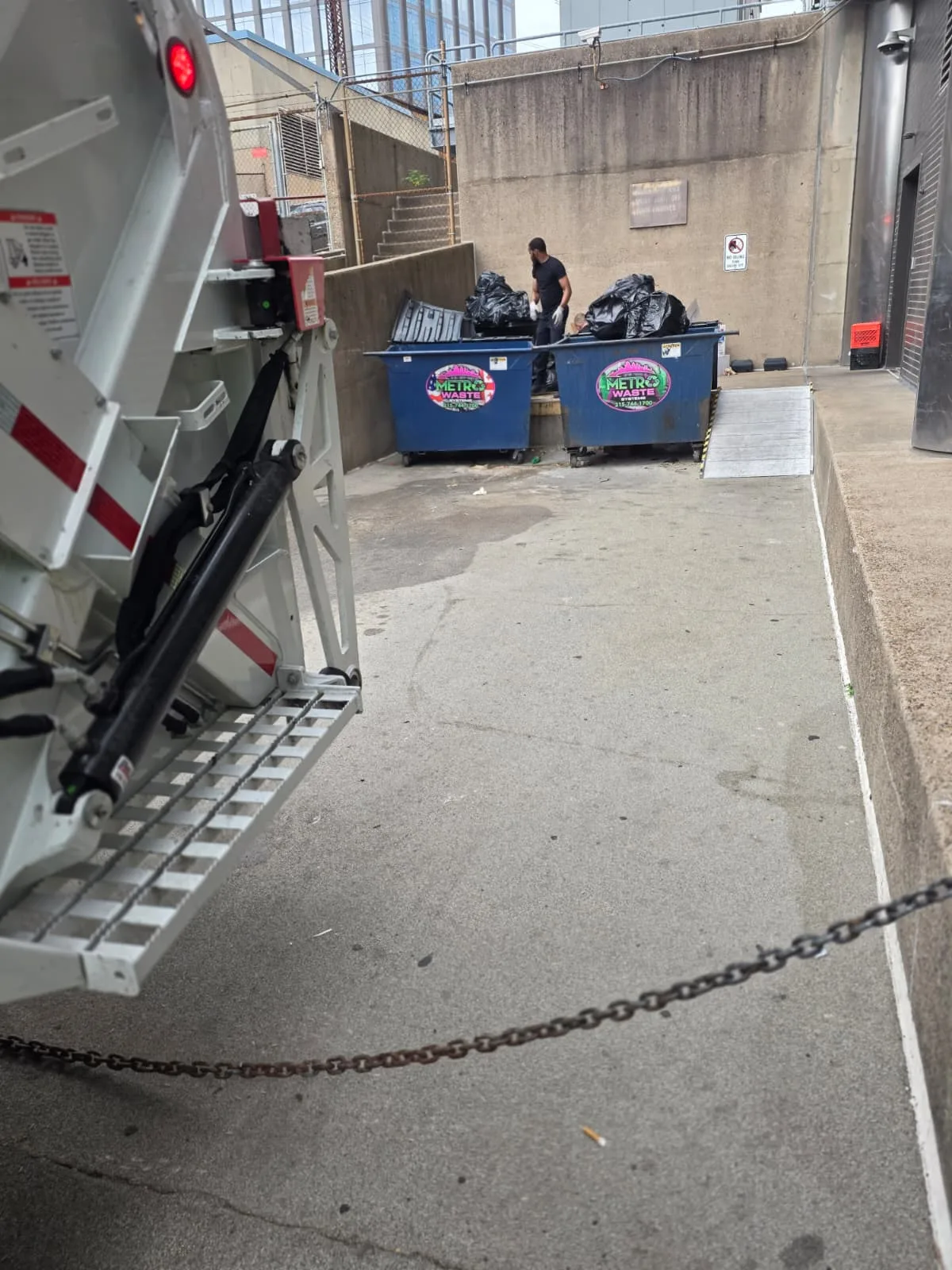
Transfer stations keep hauling efficient
When you set out commercial trash or roll-off debris, it rarely drives straight from your dock to a landfill hundreds of miles away. Most loads stop at a transfer station — a facility where waste is consolidated, sometimes sorted, and reloaded into larger trailers for long-haul disposal or processing. Understanding that step explains routing, pricing, and why local hauler reliability matters for your pickup schedule.
Metro Waste Solutions operates integrated hauling with access to transfer and processing capacity serving the Philadelphia metro. This guide walks through what happens after your container leaves the curb.
From your site to the transfer floor
Collection trucks — front-load, rear-load, or roll-off — pick up material on route. Drivers weigh loads when required and transport to the nearest appropriate transfer facility based on material type and daily routing. Urban routes prioritize efficiency: multiple small pickups consolidate into one trailer load rather than every truck making a long interstate run.
That consolidation keeps your per-pull pricing sustainable and reduces road miles per ton — relevant for corporate sustainability reporting.
What happens inside the facility
At transfer, waste may be pushed into larger walking-floor or tipper trailers, compacted further, or directed to sorting lines for recyclables and prohibited item removal. Contaminated recycling gets pulled here — another reason clean OCC and separated streams matter, as explained in our OCC guide.
Construction debris streams may be screened for unacceptable materials before onward haul. Overheight or overweight roll-offs get flagged before they leave your site — prevention beats rejection at the scale house.
Why transfer matters for pricing
Disposal cost includes tipping fees at downstream facilities plus transfer handling. Haulers with stable transfer relationships and efficient routes pass through predictable economics. Brokers without fleet control may subcontract blindly, adding margin and uncertainty on busy weeks.
Metro Waste maintains direct operational control from Philadelphia dispatch through our fleet and partner network — see why local ownership matters.
Recycling and special materials
Some recyclables bypass mixed-waste transfer or enter dedicated processing lines. Ask during account setup how your streams route — trash, OCC, and C&D may use different facilities. Special waste never belongs in standard commercial containers; routing mistakes create delays and liability.
Industrial accounts with mixed outputs should read warehouse waste planning for stream separation upstream.
Environmental and community impact
Efficient transfer reduces total truck trips through neighborhoods — fewer heavy vehicles on residential streets when consolidation works correctly. Modern facilities use scale data to track tonnage for regulatory reporting. Your monthly tickets contribute to that paper trail.
When businesses interact with transfer
Most commercial customers never visit a transfer station — your touchpoints are container service and accurate material descriptions. Exceptions include large self-haul accounts, some C&D projects, and special waste coordination. Call dispatch at +1 215-744-1700 before attempting any direct delivery.
Roll-off projects: follow our C&D disposal guide so loads are acceptable on first haul.
Questions to ask your hauler
- Where does my waste type transfer and dispose?
- How does contamination affect acceptance?
- Are recycling streams truly separated end-to-end?
- What documentation do I receive for tonnage?
Reliable hauling starts locally
Metro Waste Solutions connects collection, roll-off, recycling and transfer expertise across Pennsylvania service areas. Request service, explore all capabilities, or read more on the blog.