

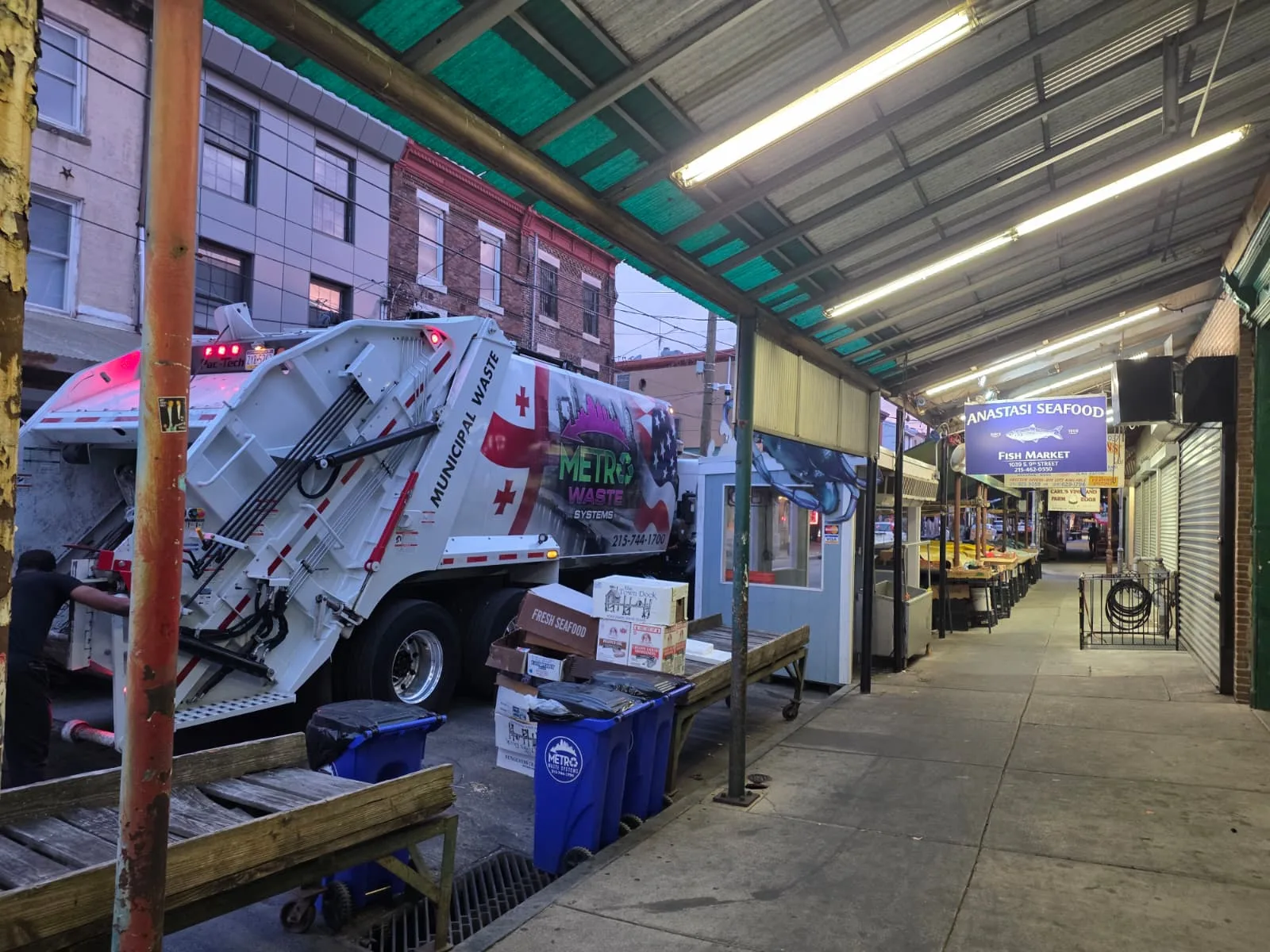
Cardboard is money on the loading dock
Warehouses and distribution centers generate enormous OCC (old corrugated container) volumes — inbound product packaging, outbound shipper cartons, and seasonal spikes that can fill a trailer bay in a week. Treating cardboard like trash throws away diversion value and inflates disposal tonnage on your invoice. A structured OCC program separates material at source, keeps loads clean, and schedules pickup before stacks block fire lanes.
Metro Waste Solutions provides commercial recycling and bale pickup for facilities across the Philadelphia metro and statewide. This guide covers setup, contamination control, and scheduling that keeps docks moving.
Source separation on the floor
Designate color-coded staging areas: OCC only, film plastic (if accepted), and trash. Train forklift operators and temp labor at shift start — contamination happens when someone throws a lunch bag into the cardboard pile. Keep OCC dry; wet bales lose value and may be rejected entirely.
High-volume sites use balers to compress OCC before pickup. If you are evaluating a baler, coordinate electrical and space requirements with our team so haul schedules match bale size and storage capacity.
Bale specs and pickup scheduling
Standard bale weights and dimensions vary by equipment. Tell dispatch your approximate bales per week and average weight so we assign the right truck — walking-floor trailers, roll-off boxes, or dedicated recycling routes. Inconsistent schedules lead to dock clutter; standing weekly or biweekly pickup beats calling only when the pile hits the ceiling.
Pair OCC service with general commercial collection for non-recyclable streams so one vendor owns the dock calendar. Our quote tool estimates combined service costs in about 60 seconds.
Contamination and rejected loads
Plastic strapping, Styrofoam peanuts, food waste and trash bags in an OCC load can reject the entire pickup — then you pay disposal rates for material you thought was recycling. Post signage at staging areas in English and any second languages your crew speaks. Audit bins monthly; one careless shift can undo weeks of diversion.
Shrink wrap and film plastic often need separate streams. Ask during account setup what our transfer and processing partners accept so you do not commingle incompatible materials.
Seasonal volume and peak planning
Retail peaks — back-to-school, holidays, promotional resets — multiply cardboard volume overnight. Build surge capacity into your plan: temporary roll-off for overflow, extra bale pickup weeks, or a standing “peak season” add-on in your contract. Call dispatch two weeks before known spikes so routes reserve capacity.
Facilities in our Pennsylvania network share the same dispatch desk — multi-site operators get one contact for Philadelphia HQ and suburban DCs alike.
Documentation and sustainability reporting
Corporate sustainability teams want tonnage diverted, not vague promises. Store monthly recycling tickets with your facilities files. Weight data supports ESG reporting and helps finance compare program ROI against landfill-only disposal.
If you are switching from a hauler that commingled everything, baseline three months of data after separation — the savings often justify baler investment or additional labor at the sort station.
Equipment and dock safety
Stacks above shoulder height without wrap fall on workers. Keep aisles clear for fire code and forklift traffic. Coordinate pickup times when docks are not receiving full trailer loads — double congestion causes missed windows and overtime.
For facilities needing dedicated trucking between buildings on campus, one hauler simplifies accountability when material moves from production to central recycling.
OCC program checklist
- Dedicated dry staging area with signage
- Baler or compact stacking plan matched to pickup type
- Standing pickup schedule with peak-season add-ons
- Monthly contamination audit at sort stations
- Tickets filed for sustainability and cost tracking
Start or upgrade your OCC program
Metro Waste Solutions recycles OCC across Philadelphia, Bucks, Montgomery and Delaware County with transparent pricing and 24/7 dispatch. Request a dock assessment, explore volume pricing, or call +1 215-744-1700. More resources on the Metro blog and FAQ.