

Two collection methods, one goal: reliable pickup
Most Philadelphia businesses first encounter commercial waste service when a hauler asks whether they need front-load or rear-load collection. The difference is not marketing jargon — it determines truck access, container placement, noise during pickup, and how much volume you can store between hauls. Choosing wrong means missed pickups, damaged pavement, or paying for capacity you cannot physically use on your site.
Metro Waste Solutions operates both front-load and rear-load routes across Philadelphia, Lower Bucks, Lower Montgomery County and cities throughout Pennsylvania. This article explains how each system works, which property types they fit, and how to align container size with pickup frequency for predictable monthly costs.
How front-load collection works
Front-load trucks approach your container head-on, lift it over the cab with mechanical arms, empty it into the hopper, and return it to the pad — usually in under three minutes. Containers are steel boxes with lids, typically ranging from two to eight cubic yards, placed on a concrete pad or asphalt pad rated for heavy loads.
Front-load excels in open parking lots, suburban retail centers, and industrial parks where a truck can drive straight at the container without reversing down a narrow alley. Enclosures are common at shopping centers to hide boxes from street view and control access. If your property already has a front-load enclosure built to standard dimensions, staying with front-load service is often the path of least resistance.
How rear-load collection works
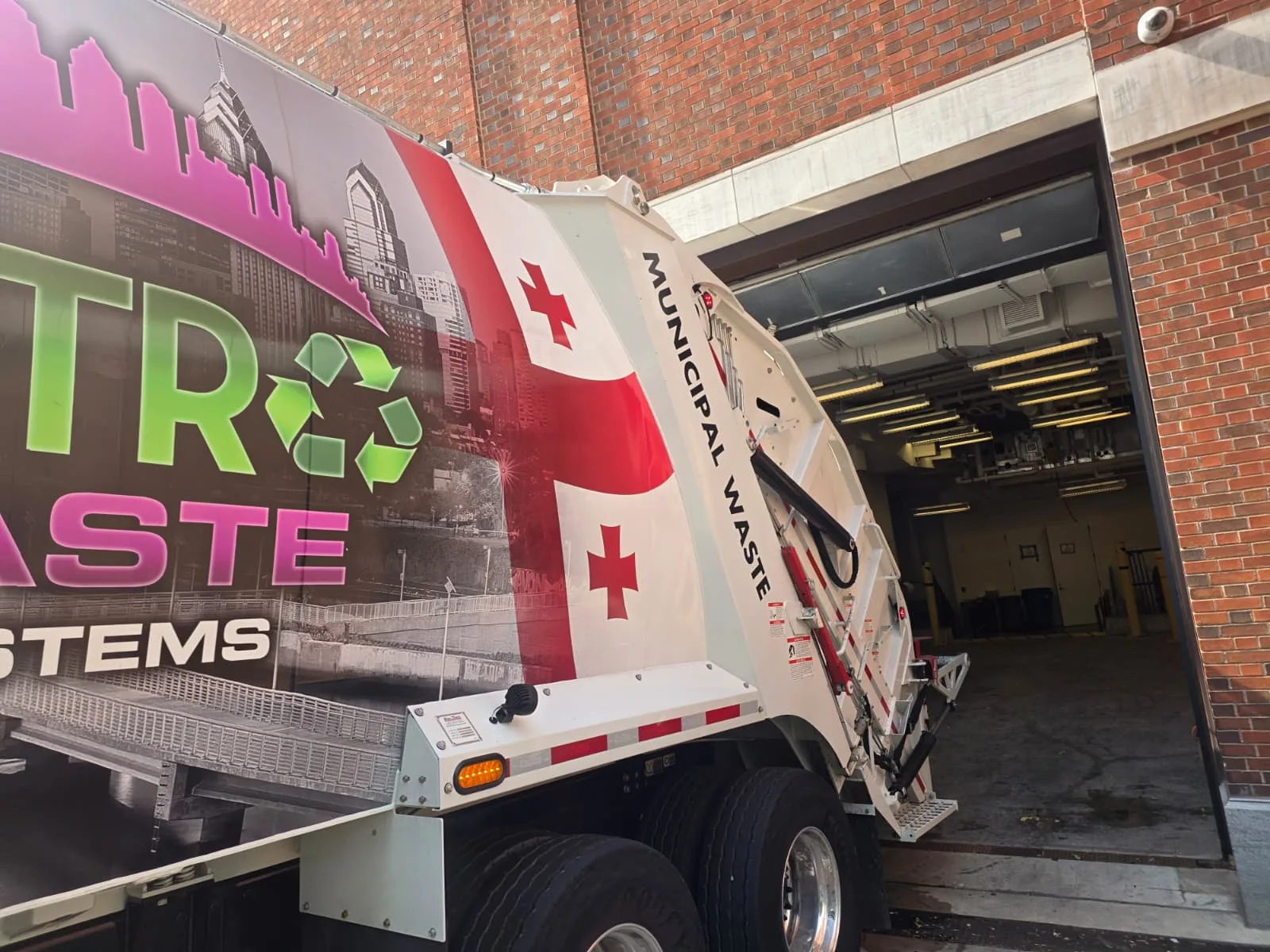
Rear-load trucks back up to the container, connect to lifting pockets on the sides, and tip material into the rear hopper. Crew members sometimes assist with maneuvering in tight spaces. Rear-load containers can be smaller for tight urban sites and do not require the same head-on clearance as front-load arms.
Rear-load is the traditional choice for Philadelphia row commercial blocks, restaurants on narrow streets, and older buildings where alleys were designed before modern front-load truck dimensions existed. If your waste area is behind the building with only alley access, rear-load may be the only practical option without expensive site reconstruction.
Access, noise and customer experience
Front-load pickup is fast and automated — good for properties that cannot tolerate long service windows. Rear-load may take slightly longer but fits where automation cannot. For customer-facing businesses, schedule pickups during off-peak hours when possible. Our after-hours waste removal guide covers how restaurants and retail stores keep lots clean without disrupting foot traffic.
Talk to dispatch about route timing when you open a new account. Call +1 215-744-1700 or use our online request form to describe your site layout — photos of the enclosure and alley help us recommend the right equipment on the first visit.
Container sizing and pickup frequency
Volume and material type drive sizing. A law office generating mostly paper and break-room trash needs a different profile than a restaurant with wet waste and cardboard from daily deliveries. Undersizing leads to overflow; oversizing wastes money on air hauls. Most accounts start with a weekly pickup and adjust after the first month of weight data.
Pair trash service with commercial recycling when cardboard or mixed recyclables represent more than twenty percent of volume — many businesses cut total disposal cost by diverting material from the trash stream. Read how to reduce waste costs for portfolio-level strategies that apply to single sites too.
When compactors replace dumpsters
High-volume generators — grocery, big-box retail, hotels — often graduate from dumpsters to self-contained compactors that compress material before haul. Compactors reduce pickup frequency, control odors better with sealed units, and lower per-ton hauling cost when volume justifies the equipment rental. Site engineering must support compactor pads, electrical hookups if required, and drainage.
Property managers running multiple tenant types from one pad should review our portfolio program before installing shared equipment — lease allocations and maintenance responsibility need clear language before the first crush cycle.
Cost factors beyond the monthly rate
Quoted rates reflect container size, pickup frequency, material type, drive distance, and enclosure complexity. Weight overages, contamination fees, and lock replacement add up when tenants misuse containers. Transparent haulers explain these line items up front. Review our FAQ and ask dispatch for a written quote that lists included tonnage and overage rates.
New commercial accounts may qualify for incentives on our offers page, including the first-month service credit when switching from another carrier without a service gap.
Front-load vs rear-load: decision checklist
- Choose front-load if trucks can approach containers head-on in a lot or wide driveway
- Choose rear-load if access is alley-only or head-on clearance is under thirty feet
- Consider compactors when you haul more than six cubic yards of loose trash daily
- Add recycling when cardboard, metal or mixed recyclables are a visible portion of waste
- Call dispatch when the site is mixed-use or under renovation — temporary roll-off service may run alongside permanent collection
Maintenance, pad condition and enclosure longevity
Collection equipment is only half the equation — deteriorating pads, broken casters on containers, and rusted lids drive downtime and contamination. Budget for pad resurfacing every ten to fifteen years in high-traffic retail sites. Replace lids that no longer close; open dumpsters attract pests and water weight that shows up on your tonnage line.
When you renovate an enclosure, confirm dimensions with dispatch before pouring concrete — standard container footprints differ between front-load and rear-load boxes. A mis-poured pad costs thousands to fix and delays service activation for new tenants moving in on the first of the month.
Local fleet, statewide reach
Metro Waste maintains a 27-truck fleet dispatched from Philadelphia with 24/7 support. We serve accounts across our published service area map, including dedicated resources for Philadelphia waste management and surrounding counties. Learn more about our company on the About page or browse the full services catalog.
Get a collection setup that fits your site
Stop guessing which container belongs in your enclosure. Our team visits properties every week with the same trucks that will service your account — not a sales rep who never saw your alley. Explore more articles on the Metro blog, or call +1 215-744-1700 to schedule a site review and written quote today.