

Commercial waste rules property managers cannot ignore
Managing a multi-tenant building in Philadelphia means you inherit responsibility for waste that tenants generate — even when individual suites contract their own pickup. City sanitation rules, lease language, insurance requirements and tenant complaints all converge on the property manager's desk when dumpsters overflow, recyclables land in the wrong stream, or illegal dumping appears in your alley at midnight.
This guide explains what Philadelphia property managers need to know about compliant commercial waste collection, how to structure vendor relationships that scale across portfolios, and where Metro Waste Solutions fits as a locally owned partner with statewide Pennsylvania coverage.
Who is responsible for commercial waste at a multi-tenant site?
In most commercial leases, the landlord maintains shared areas — loading docks, compactor pads, enclosure walls and enclosure keys — while tenants contract for service to their suite or pay a pro-rata share through CAM charges. When nobody owns the full picture, you get duplicate invoices, missed pickups and containers that are the wrong size for actual volume.
Centralizing waste service under one hauler simplifies enforcement. Our property manager portfolio program gives you one invoice, one account manager and consistent container standards at every address in your portfolio. That structure makes it easier to audit service levels and catch problems before a city inspector or tenant attorney does.
Philadelphia commercial recycling expectations
Philadelphia requires eligible commercial properties to recycle. Property managers must provide adequate recycling capacity, educate tenants on acceptable materials, and maintain documentation that programs are active — not just a blue dumpster sitting empty behind the building. Mixed-use properties with retail ground floors and residential upper units face extra complexity because waste streams differ by tenant type.
Metro Waste offers dedicated commercial recycling alongside trash collection so you can pair streams with one dispatch contact. When cardboard volume from retail tenants spikes during move-in season, we adjust container size or pickup frequency instead of letting material pile up beside the enclosure.
Enclosure design, access and safety compliance
Dumpster enclosures must allow trucks to enter, turn and exit without blocking fire lanes. Low overhead clearances, broken gates and parked tenant vehicles are the top reasons pickups fail — and failed pickups become odor complaints by afternoon. Property managers should inspect enclosures weekly, mark fire lanes clearly, and include waste area rules in tenant handbooks.
Front-load containers work well when trucks can approach head-on in a parking lot. Rear-load service fits tighter alleys behind row-style commercial blocks. Our guide on front load vs rear load collection helps you match equipment to each property's physical layout.
Illegal dumping and contamination risks
When enclosures are unlocked or containers overflow, neighboring businesses and residents use your dumpster for free. That contamination drives up weight overages, attracts rodents, and creates liability if prohibited items appear in the load. Camera coverage, locking bars on roll-off boxes, and scheduled overflow checks reduce incidents dramatically.
If you operate properties in multiple cities, confirm coverage with a hauler that publishes a clear service area map and responds after hours. Our dispatch runs 24/7 — useful when illegal dumping happens on a Friday night and you need a roll-off swap or extra pickup before Monday foot traffic.
Vendor selection: what to put in the contract
Strong waste contracts specify container sizes, pickup frequency, response time for missed service, snow and holiday schedules, and how weight overages are calculated. Ask whether the hauler subcontracts overflow routes — consistency matters when tenants compare service across your portfolio.
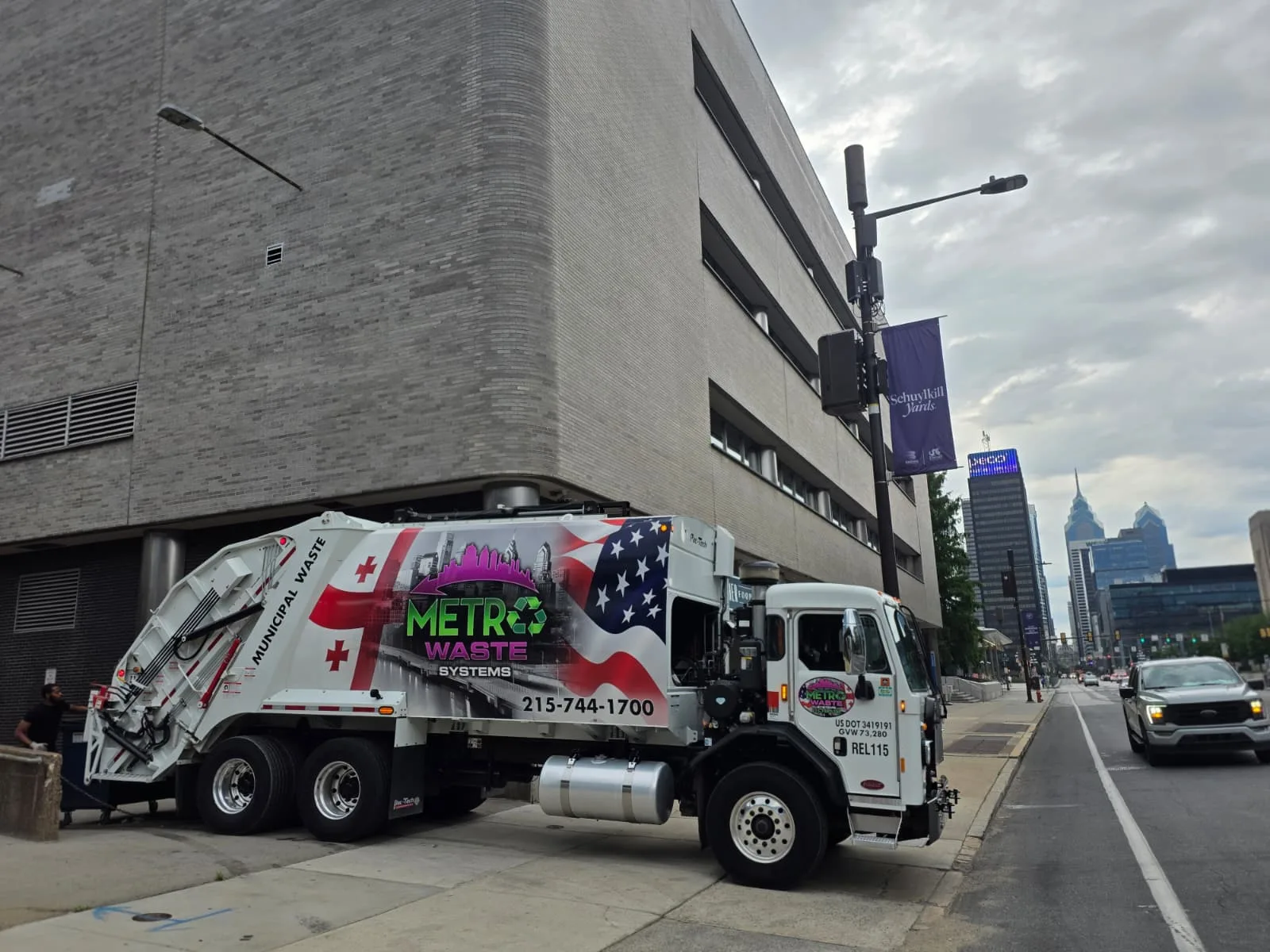
Metro Waste is Philadelphia-based with a 27-truck fleet we maintain in-house. You speak with dispatch in Tacony, not a national call center reading a script. Review our company background, check common questions on the FAQ page, and request references from similar multi-tenant accounts before switching vendors.
Right-sizing service to control cost
Oversized containers with weekly pickup when you only need biweekly service waste money. Undersized containers generate overflow calls that cost more than a proper size upgrade. Audit each property quarterly: compare pickup weights, note contamination events, and interview site staff about near-misses.
Read our detailed article on reducing waste costs at multi-tenant properties for levers like recycling diversion, compactor installation, and consolidated billing. New accounts may qualify for a first-month credit through our new account offer.
Compactors, roll-off and special waste events
High-volume retail and grocery tenants often justify self-contained compactors that reduce haul frequency. Renovation and tenant improvement seasons may require temporary roll-off dumpsters on site for two to four weeks — coordinate delivery with contractor schedules so containers do not block loading docks during receiving hours.
For portfolio-wide renovation programs, bundle roll-off swaps through our contractor pricing structure even if your primary need is property management rather than ground-up construction. One dispatch contact handles every address on the project list.
Documentation, inspections and tenant communication
Keep manifests, weight tickets and service logs for at least three years. When the city or an insurer asks for proof of recycling participation, you should produce program descriptions, photos of labeled containers, and tenant memos within hours — not days. Send quarterly waste reminders with acceptable material lists and enclosure rules.
Need a template for tenant communication? Contact our team or submit a service request and ask for property manager onboarding materials. We walk new portfolio accounts through container labeling, pickup schedules and escalation paths for missed service.
Build a compliant program that scales
Waste compliance is not a one-time checkbox — it is an operating discipline that protects NOI, tenant satisfaction and your reputation with the city. Metro Waste Solutions supports Philadelphia property managers with recurring collection, recycling, compactors, roll-off and after-hours options backed by local accountability.
Explore more resources on our blog, view active promotions on the offers hub, or call +1 215-744-1700 to schedule a portfolio review today.