

Industrial sites need a waste map, not a single dumpster
Warehouses, light manufacturing, and industrial parks generate mixed streams — shipping cardboard, production scrap, pallet waste, cafeteria trash, and occasional project debris from line retooling. One container at the dock rarely fits all of it. Planning separate streams, equipment, and schedules prevents dock bottlenecks and runaway disposal spend.
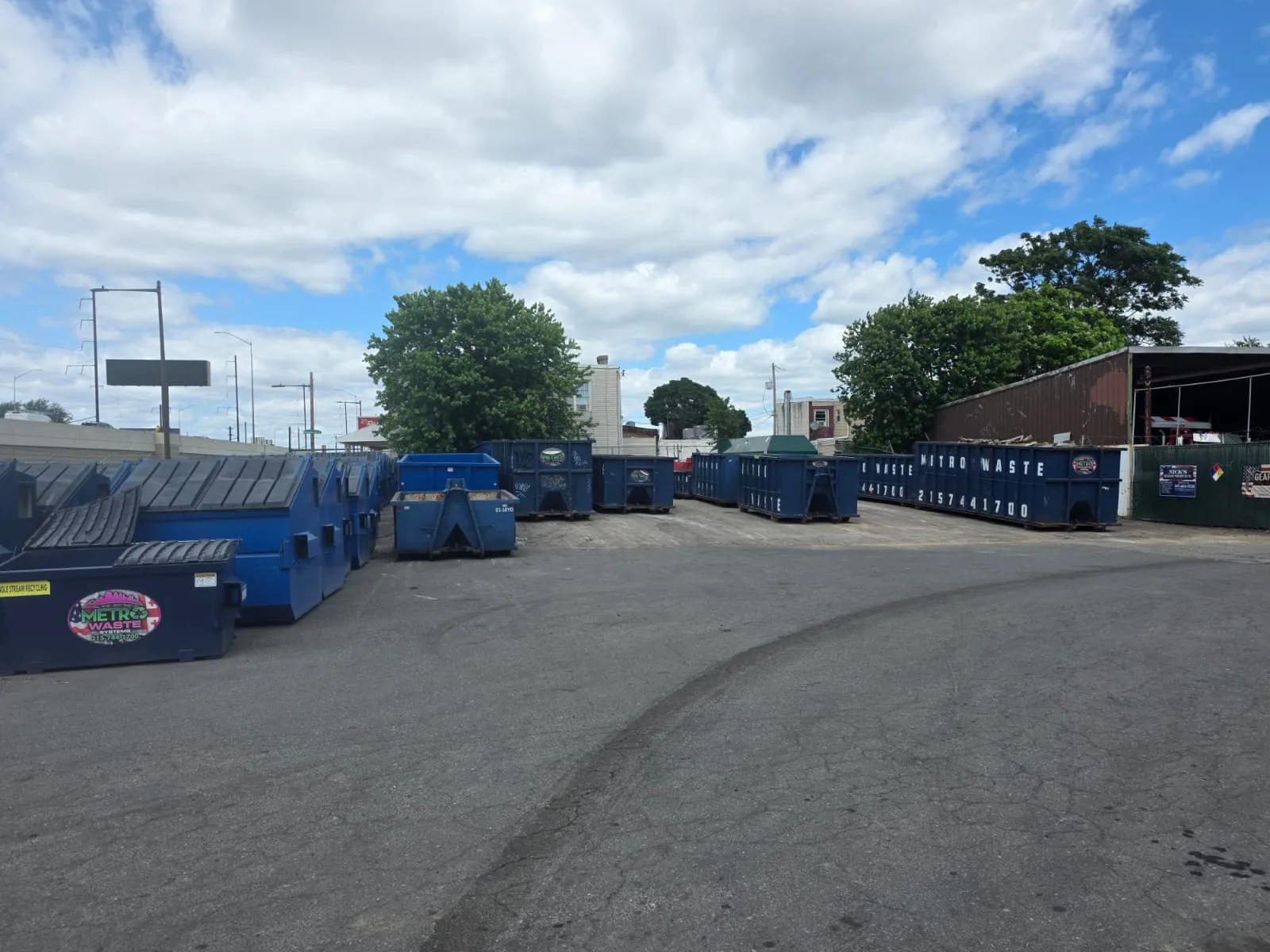
Metro Waste Solutions supports industrial accounts with collection, compactors, recycling, roll-offs, and trucking across the Philadelphia metro and statewide.
Map every stream before quoting
Walk the floor with operations: where cardboard is generated, where trash accumulates, whether production scrap is recyclable metal or mixed waste, and how shifts change volume. Document peak delivery days and month-end inventory cycles. Quotes without this walk are guesses — we prefer site visits for industrial accounts.
Multi-building campuses may need central consolidation plus satellite containers. One dispatch contact coordinates all locations on our service area network.
Dock scheduling and truck access
Industrial pickups compete with inbound freight. Assign standard windows — Tuesday/Friday before noon, for example — and communicate dock occupancy rules. Overhead doors, levelers, and trailer spots must stay clear; a blocked compactor pull backs up the entire shift.
When internal logistics move material building to building, dedicated hauling may beat employee trailers that were never meant for waste loads.
Compactors, roll-offs and overflow
Steady high-volume trash belongs in a compactor. Project debris — equipment installs, racking changes, floor repairs — belongs in temporary roll-off boxes sized per our size guide. Mixing project concrete into daily trash triggers overweight fees and rejected loads.
Standing swap schedules for roll-offs beat emergency calls when production spikes. Contractor accounts use our project pricing program for predictable swap rates.
OCC and production recyclables
Distribution-heavy facilities should run formal OCC programs with bale or high-volume pickup. Metal scrap may have salvage value — separate streams even if Metro hauls both; clean loads cost less to process.
Safety and compliance
Keep fire lanes and egress paths clear of staged bales and pallets. Train forklift operators on weight limits for containers — heavy scrap in a small box is a ticket and a safety hazard. Prohibited materials (chemicals, batteries, pressurized tanks) need documented special disposal, not the dock dumpster.
Industrial accounts near residential Philadelphia neighborhoods may need off-hours service to respect local noise expectations.
Metrics and continuous improvement
Track tonnage by stream monthly. If trash grows while production is flat, investigate contamination or theft of recyclables. If haul frequency climbs, evaluate compactor ROI or baler addition. Facilities data feeds next year’s budget and sustainability reports.
Industrial planning checklist
- Floor walk documented with stream types and volumes
- Dock windows assigned and communicated to dispatch
- Compactor or roll-off matched to steady vs. project waste
- OCC/recycling separated from trash
- Prohibited material policy posted at each disposal point
Plan your industrial waste program
Metro Waste Solutions combines collection, recycling, roll-off and trucking with 24/7 Philadelphia dispatch. Request a site walk, call +1 215-744-1700, or explore the blog and FAQ.