

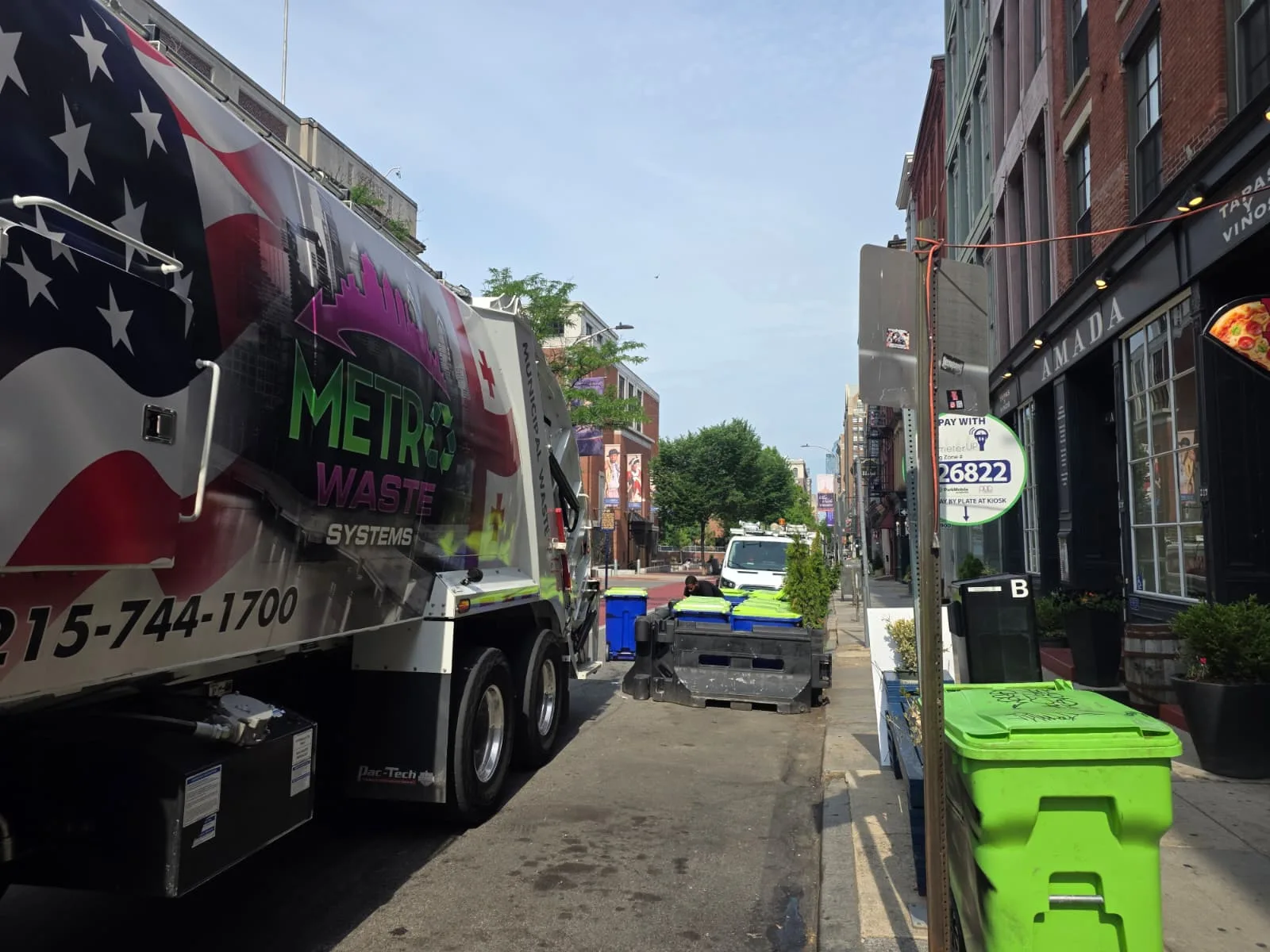
C&D debris waits for no schedule
Construction and demolition projects live on tight timelines — when debris piles up at the loading zone, subs cannot deliver materials, inspectors delay sign-off, and general conditions burn cash every day the site stays cluttered. A disciplined disposal plan is as important as the crane schedule. It starts with choosing the right open-top container, setting swap cadence before demo day, and separating materials when recycling or reuse credits apply.
Metro Waste Solutions serves Philadelphia contractors and developers with roll-off dumpster rental, trucking and hauling, and project pricing designed for active jobsites. This guide covers field-tested practices that keep C&D streams moving safely and legally across our full Pennsylvania service territory.
Plan containers before the first swing
During pre-construction, map where roll-off boxes will sit relative to crane radius, fire lanes, and pedestrian paths. A 40-yard container belongs where a loader can reach it — not where it blocks the only gate. Confirm underground utilities and pavement load limits with the engineer; a fully loaded roll-off exceeds passenger vehicle weight on thin asphalt.
Match size to phase: demo may need a 40-yard box swapped twice weekly; finish work might drop to 20-yard units for packaging and scrap. Our roll-off size guide breaks down ten through forty yard options with project examples. Call dispatch at +1 215-744-1700 or request delivery online with your phase schedule so we reserve swap capacity on busy weeks.
Material separation and recycling value
Clean loads of metal, cardboard, and some concrete products cost less to process than mixed C&D sent straight to landfill. Separate streams on site when economics justify the labor — many Philadelphia projects stockpile metal in a small roll-off and mixed debris in a larger box. Contamination (trash bags in a metal box, food waste in C&D) rejects entire loads and triggers change orders nobody wants.
Metro Waste offers commercial recycling alongside disposal hauls. Ask account setup about acceptable separation at our transfer process — requirements vary by facility and material type.
Swap cadence and overflow prevention
Never load above the container sidewall — overweight and over-height boxes do not leave the site until material is removed, which stops work. Set standing swap orders at project kickoff: for example, every Tuesday and Friday on a six-week demo. Adjust when supers report fill rates; waiting until the box is full guarantees a delay when routes are tight.
Our 27-truck fleet and 24/7 dispatch support priority swaps for contractor accounts with active schedules. Same-day service is often available when you call early — see the FAQ for lead times in your zone.
Prohibited and special-handling materials
C&D containers are for non-hazardous construction debris — lumber, drywall, roofing, brick, tile, and similar materials. Keep paint with liquid, asbestos, chemicals, tires, and appliances with refrigerant out unless you arrange special handling. Mixing prohibited items can reject a full box and shut down your debris flow for days while you source alternative disposal.
When a tenant improvement uncovers unexpected materials, pause loading and call dispatch before the truck arrives. Our team routes special waste through proper channels — guessing creates liability for the GC and the owner.
Site safety and neighbor relations
Wind-blown debris from open-top boxes annoys neighbors and creates trip hazards on sidewalks — mesh tarps or nightly sweep assignments are cheap insurance on urban infill jobs. Keep fire lanes clear; Philadelphia inspectors enforce access aggressively on multi-family rehab projects. Document daily enclosure photos if the owner requires progress reporting.
Projects in dense neighborhoods may need after-hours pickup or swap to avoid blocking rush-hour traffic on narrow streets. Mention access restrictions when you book so routes are planned correctly the first time.
Coordinating subs and haul timing
Demolition subs fill boxes fast; framers generate scrap slower but steadily. Align swap days with demo peaks, not calendar convenience. If multiple trades share one box, assign a site superintendent authority to call swaps — otherwise everyone assumes someone else did it until the pile overflows.
For large horizontal construction, pair roll-off service with dedicated trucking when material moves between staging areas on site or to off-site processing. One hauler contact simplifies billing and accountability.
Documentation, weights and change orders
Track tonnage by phase for owner reporting and future estimating. Weight overages on roll-off hauls usually mean dense material — concrete, brick, dirt — loaded without telling dispatch. Splitting heavy material into scheduled smaller hauls often beats one surprise overweight ticket.
Store tickets with project closeout files. Developers bidding the next job in the same neighborhood will thank you for accurate debris factors per square foot.
Philadelphia and statewide project support
From Tacony dispatch we serve Philadelphia core, surrounding counties, and cities across Pennsylvania on our coverage map. Dedicated pages like Philadelphia waste management describe local capabilities; our About page explains why contractors choose a locally owned hauler over national brokers who subcontract blind.
Combine jobsite roll-off with permanent commercial collection when the project includes owner-occupied space coming online — one relationship covers construction phase and operating phase.
Checklist before your next C&D haul
- Container size matched to phase and equipment access
- Standing swap schedule with superintendent ownership
- Prohibited material signage at the box
- Fire lane and sidewalk clearance verified daily
- Heavy material flagged with dispatch before load
- Recycling streams separated when economics work
Closeout, final haul and owner turnover
The last container on a finished project often sits longer than expected while punch-list debris accumulates. Schedule a final sweep haul before certificate of occupancy — owners do not want a rusting box in the entrance photo. Walk the site with the super forty-eight hours before the last swap to confirm no hazardous leftovers remain in the mechanical room or roof penthouse.
If the building transitions to operations with tenant move-ins, hand off enclosure keys and service schedules to property management early. Our team coordinates ongoing collection accounts so the construction roll-off does not simply disappear while trash from fit-out vendors still needs a home.
Keep your jobsite moving
Metro Waste Solutions delivers 10–40 yard open-top containers, transparent project quotes, and dispatch that answers at 2 AM when your super needs a swap before concrete pour. Read more on the blog, explore current offers, or contact us to lock containers for your next demolition or build-out.