

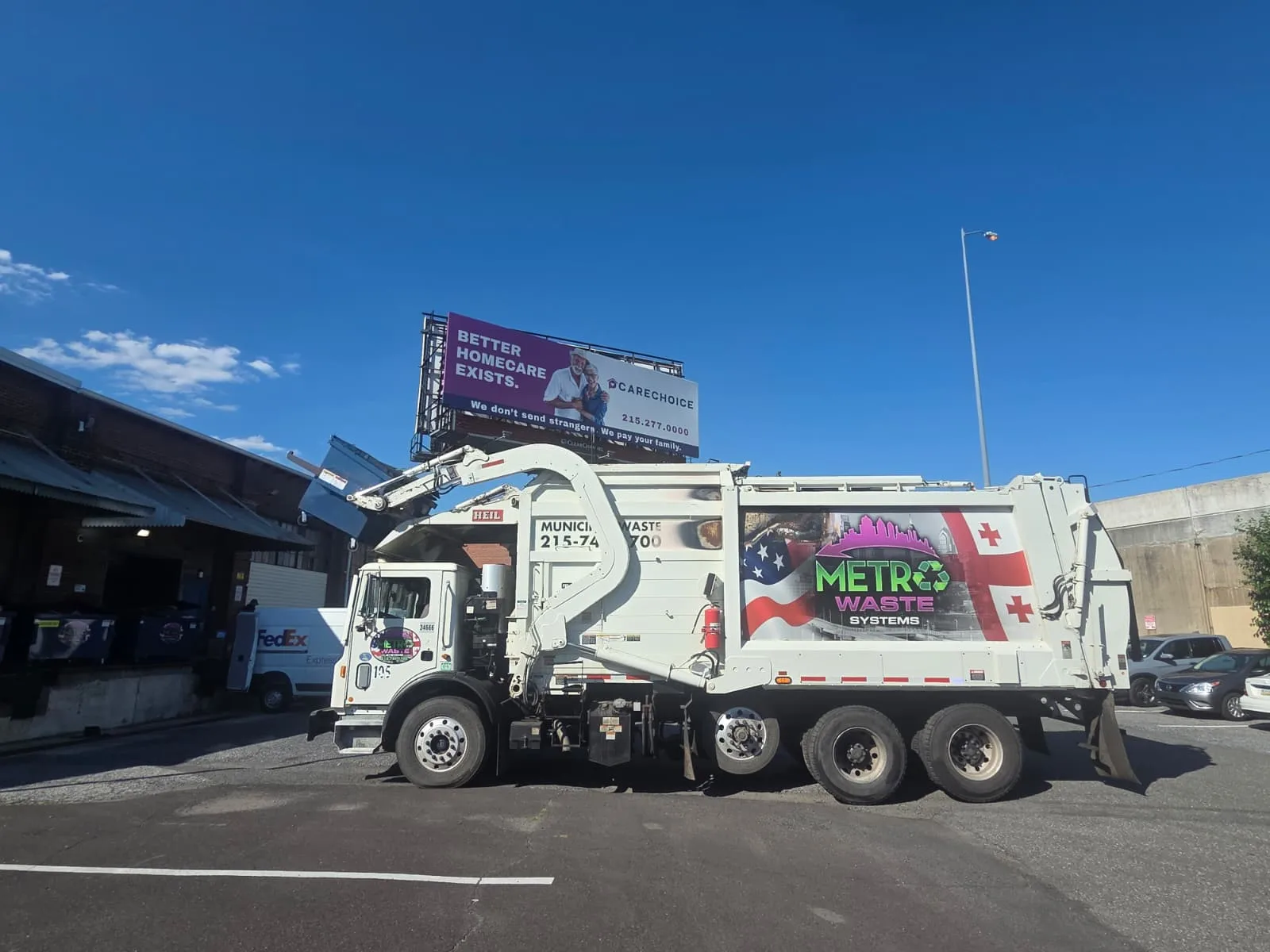
Recycling is not optional for most Philadelphia businesses
Commercial operators in Philadelphia work under city and state expectations to recycle acceptable materials rather than landfilling everything in one stream. Non-compliance risks fines, failed inspections, and reputational damage — especially for food service, retail chains, and property managers answerable to corporate sustainability teams. Understanding requirements is the first step; execution with the right hauler is the second.
Metro Waste Solutions provides commercial recycling alongside trash collection across the metro. This guide explains what businesses should recycle, how to document programs, and where haulers fit in.
What typically must be recycled
Common mandatory or strongly encouraged commercial recyclables include corrugated cardboard (OCC), office paper, aluminum and steel cans, glass bottles and jars, and #1 and #2 plastics in many programs. Exact rules evolve — verify current Philadelphia commercial guidance when launching a program. Hazardous materials, food waste, and certain plastics usually require separate handling.
Property managers should align building rules with city expectations and post tenant instructions at enclosures. See our property manager compliance guide for multi-tenant specifics.
Single-stream vs. source-separated
Some accounts use single-stream recycling bins; others separate OCC at the dock for higher material value. Contamination — food in paper, plastic bags in OCC — rejects loads and defeats the program. Train staff and tenants with simple visuals; audit monthly.
High-volume cardboard generators should read our warehouse OCC guide for bale and pickup best practices.
Documentation and inspections
Keep recycling tickets and weight reports with facilities files. When inspectors or corporate auditors visit, show container labels, pickup schedules, and diversion data — not verbal assurances. Gaps in documentation read as gaps in compliance.
New accounts: tell dispatch you need separate recycling service at signup so containers and routes are configured day one, not after a citation.
Working with your hauler
Your hauler should clarify accepted materials, container colors, pickup frequency, and contamination policies. Metro Waste answers those questions directly — no broker middleman. Combine recycling with trash collection for one invoice and one dispatch number: +1 215-744-1700.
Facilities switching vendors should review smooth transition steps so recycling does not lapse during container swap week.
Common mistakes to avoid
- Landfilling flattened cardboard to avoid “extra” bins
- Using trash bags inside recycling containers
- No signage for tenants or night crews
- Assuming grease or food waste goes in recycling
- Never reviewing bills for recycling vs. trash tonnage
Beyond compliance — cost and brand value
Recycling done right often costs less per ton than trash when loads stay clean. Marketing and HR teams use diversion stats in community messaging. Philadelphia customers notice businesses that keep enclosures tidy and recycle visibly.
Explore offers for new recycling add-ons and use the calculator to compare service configurations.
Stay compliant and efficient
Metro Waste Solutions recycles across our full Pennsylvania service area. Contact us for program setup, read the blog, or call dispatch anytime — we are locally owned with 24/7 support from Tacony.